
A rich itinerary, assessed one experience at a time
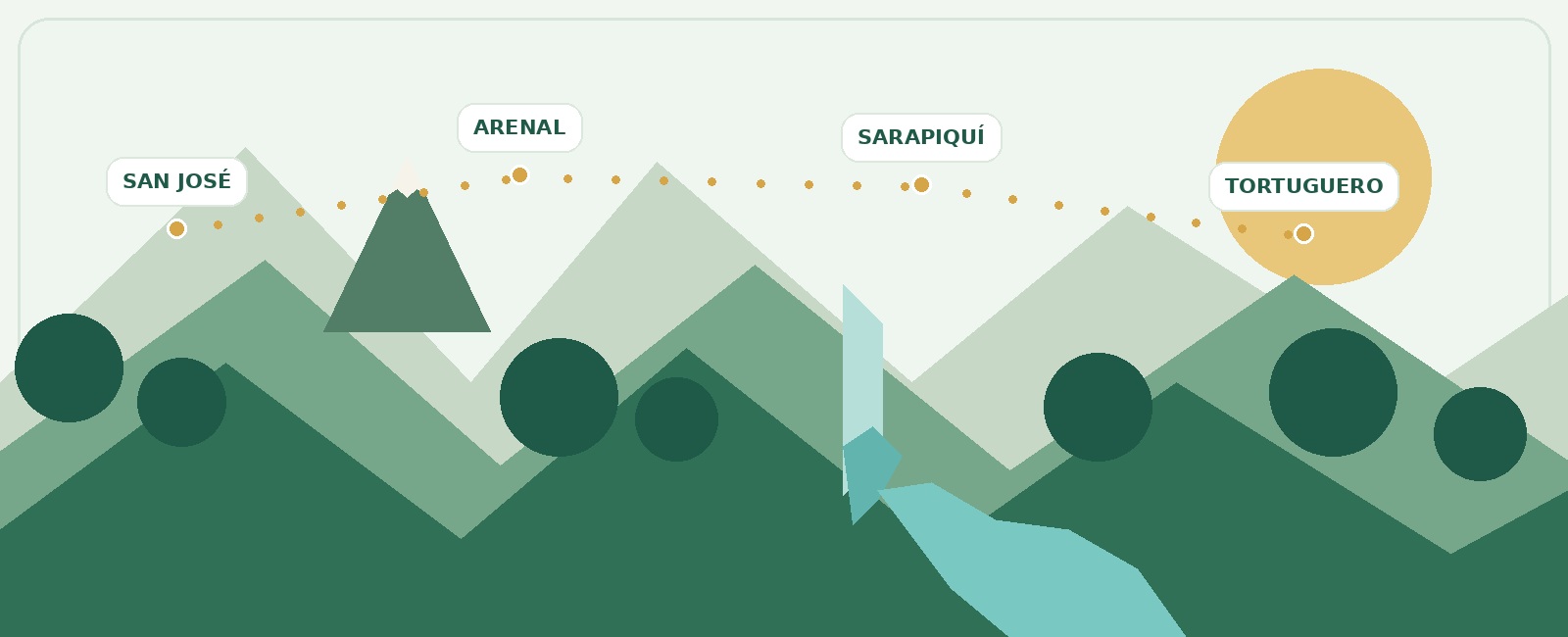
Green World Adventures’ “Costa Rica Sustainable Pura Vida 10D9N with Car” links San José, Arenal, Sarapiquí and Tortuguero. Across ten days and nine nights, the programme combines wildlife and rainforest learning with community visits, a JAZON-supported homestay, a community-prepared meal and a cooking class. The review recognizes the care and variety behind those choices while asking a practical question: what evidence can show how the experience is delivered from day to day?
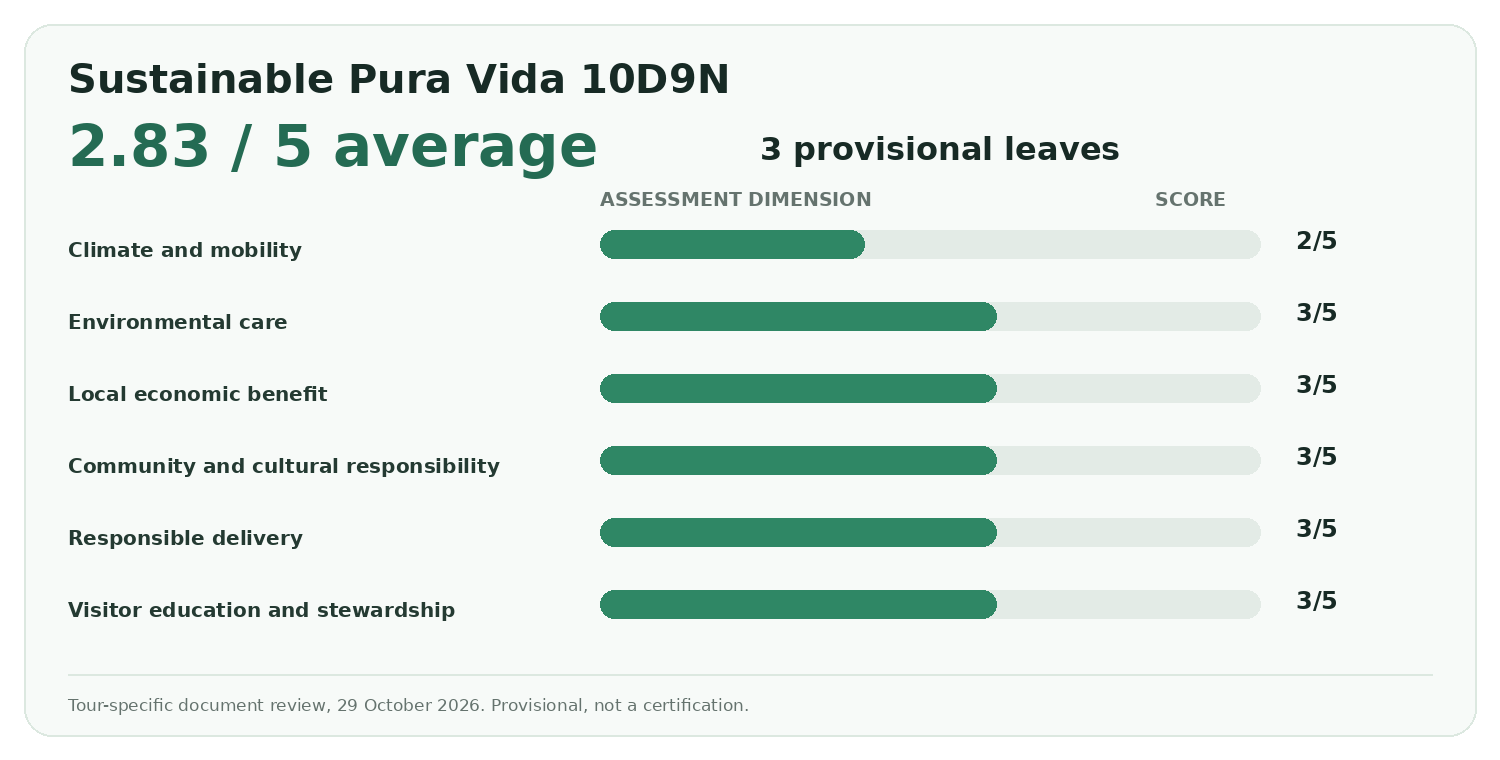
The indicative mean rounds to three leaves. Climate and mobility scored 2/5; the other five dimensions scored 3/5. The result applies to this itinerary, not to Green World Adventures as a whole.
The score points to evidence, not a verdict
The tour is provisional and document-based. The review used the submitted itinerary and transport information. It did not include an on-site or live-video visit, and the materials have not been independently verified. The score therefore recognizes what is documented today and identifies where more tour-level detail could improve the assessment.
Transport is the clearest next step
The itinerary spans several regions and includes private airport transfers, six days of self-drive and powered boat movements in Tortuguero. The assessment estimates 358.39 kg CO₂e per departure, or 44.80 kg per traveller using an assumed group of eight. This is a modeled baseline, not a measured result. The boat routes, operating times and fuel rates rely on assumptions; international travel to and from Costa Rica is excluded.
The value of the estimate is that it makes a major part of the trip visible enough to discuss. Green World Adventures could strengthen the next review by sharing actual passenger loads, route distances and boat operating details, then documenting practical steps such as shared occupancy or more efficient routing where suitable. The figure is counted once within Climate and Mobility.
Nature and community are already central to the journey
The itinerary includes a wildlife rescue-centre visit, naturalist-led rainforest activities, a bat education programme, an organic pineapple tour and visits to Tortuguero National Park. These experiences give travellers opportunities to learn about ecosystems and wildlife. A future evidence pack could add the activity-level protocols behind that experience, including wildlife-distance guidance, waste and water practices, and how group pressure is managed.
Community activities are another defining feature. The homestay, meal, cooking class, local guiding and intercultural exchange create points of contact with residents and local providers. The current itinerary describes these opportunities, while the assessment asks for detail on local purchasing, employment, fair payment, community consent and how benefits are shared. That information would help distinguish a meaningful design intention from a documented tour-level outcome.
What would make the next review stronger
- Transport records. Share actual occupancy, distances, transfer and boat details, and any reduction measures.
- Environmental practice. Add available water, energy and waste records, plastic-reduction measures, and wildlife interaction protocols.
- Community benefit. Document local purchasing and employment, supplier payments, consent for community activities, and benefit-sharing.
- Guest care and learning. Summarize guide and supplier oversight, accessibility, safety, feedback, and a short visitor stewardship guide.
A practical model for tour operators
This case shows why a tour-level review can be useful before every metric is perfect. An itinerary can already offer memorable nature and cultural learning while also exposing the questions that need better records. A clear route, evidence attached to individual activities, transparent assumptions and a short improvement plan give operators a manageable way to build a more credible sustainability story over time.
Sources and further reading
- Green Path Alliance. Assessment approach
- Green World Adventures. Official operator website
- Responsible tourism at Green World Adventures. Operator guidance
- Costa Rica Sustainable Pura Vida experience. Sustainability in Tourism listing
- Global Ecotourism Network. Definition and key concepts
- Green Path Alliance Costa Rica scorecard. Internal assessment record dated 29 October 2026